Character Cards for Social Media Content: When It Fits and Where It Breaks
See when character cards for social media content fits, how the workflow usually looks, and where the limits appear before you build around it.
For readers evaluating character cards for social media content, the fit question is where it helps, what it costs, and which review signal matters before repeating the workflow. A useful character cards for social media content article helps the reader judge voice, boundaries, discovery flow, and session quality before building a longer routine. For tavern-ai.com, start with Tavern AI; bring in Browse All Characters only when it clarifies the next decision.
Use a compact first pass for character cards for social media content: one character role, one opening scenario, and whether the voice and boundaries still feel coherent after a short chat. The local decision belongs on Tavern AI - Chat with Spicy AI Girlfriends & Character Cards; the supporting frame from SillyTavern's Characters documentation and SillyTavern's Tags documentation keeps the article from drifting into vague advice. That matters for readers deciding whether character cards for social media content fits a specific use case, workflow, or constraint.
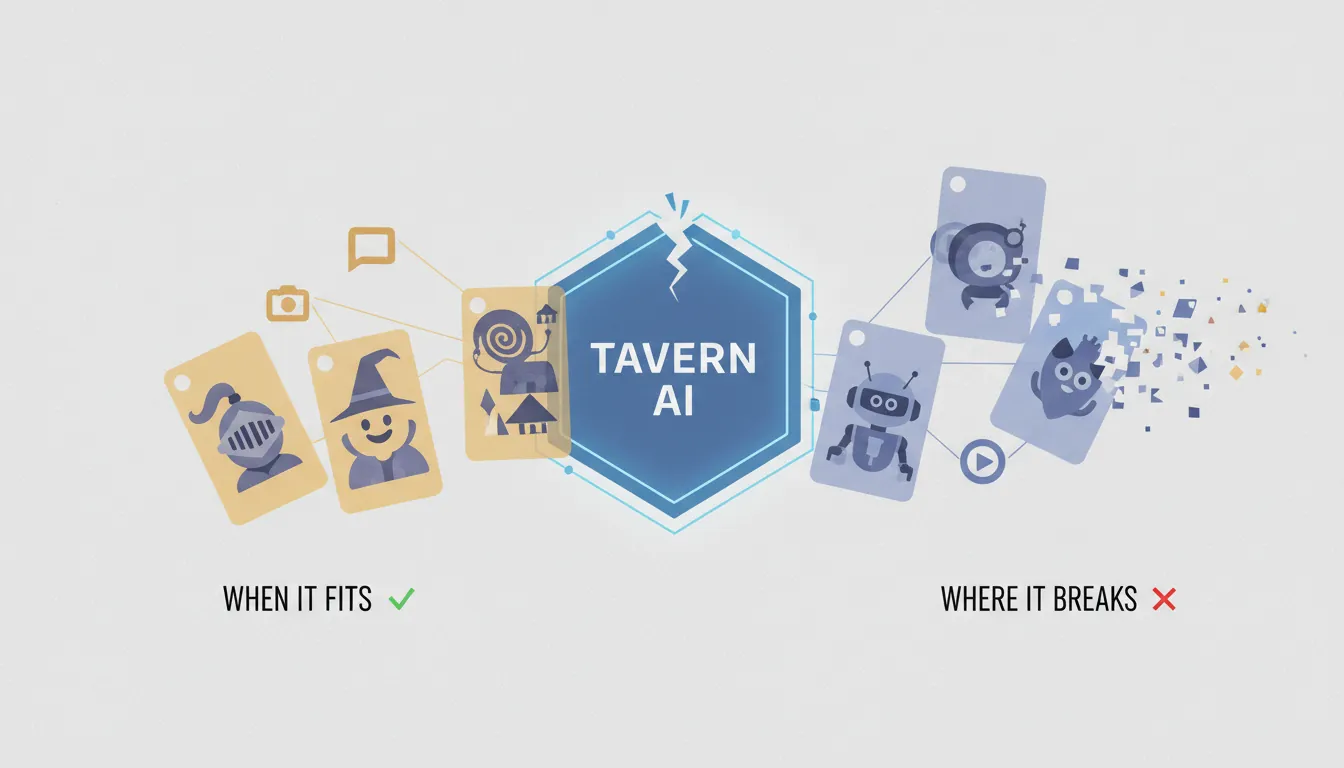
For tavern-ai.com, the order is practical: understand the decision, run one bounded test, and leave with a clear follow-up path.
Key Takeaways
- Use character cards for social media content to answer one practical decision before widening the workflow.
- Start with Tavern AI; compare other pages only when the first result leaves a specific question open.
- Match each prompt to the channel constraint before rewriting the whole idea when tavern-ai.com readers make the decision.
- Use Turn One Character Voice Into Channel Variants to make the next choice more concrete.
Match Character Cards for Social Media Content to the Channel Job
Character Cards for Social Media Content changes when the channel changes. A short social post, ad hook, visual brief, and long-form update can share one idea, but they cannot share the same constraint for tavern-ai.com readers. Start with the channel before polishing the prompt when tavern-ai.com readers make the decision.
Tie the advice back to channel, format, and audience; those details are what make this section belong to the topic. A useful character workflow test stays concrete: one character role, one opening scenario, and whether the voice and boundaries still feel coherent after a short chat when tavern-ai.com readers make the decision.
- Match the prompt to 1 channel job: attention, explanation, conversion, or reuse in the tavern-ai.com workflow.
- Change the format constraint before changing the whole idea on tavern-ai.com.
- Review the output against the audience's scroll context, not just whether it sounds polished for this tavern-ai.com page.
Channel Decision Table
| Area | Decision | Review Signal |
|---|---|---|
| Channel | Decide where the creative appears first so format and framing are not generic | Look for less cleanup, clearer fit, or a safer stop rule |
| Format | Decide how this changes the first character cards for social media content test | Look for less cleanup, clearer fit, or a safer stop rule |
| Audience | Decide how this changes the first character cards for social media content test | Look for less cleanup, clearer fit, or a safer stop rule |
That baseline matters before the reader opens Tavern AI or uses SillyTavern's Characters documentation as a reference point, because both are easier to judge when the first job is already named on tavern-ai.com.
Turn One Character Voice Into Channel Variants
Examples are useful only when they show the constraint, not just the finished wording. For character cards for social media content, the same product idea should look different as a short caption, an ad hook, and a structured visual prompt. That contrast helps the reader see what the prompt must control before they generate more variants for tavern-ai.com readers.
Keep the checkpoints visible: short post, hook, and longer update. For this section, keep the evidence visible through one character role, one opening scenario, and whether the voice and boundaries still feel coherent after a short chat on tavern-ai.com.
- Use 3 examples: a short post, an ad hook, and a structured visual prompt for tavern-ai.com readers.
- Define audience, topic, tone, and output length before asking for copy for this tavern-ai.com page.
- State the required constraint so the example can be judged instead of admired on tavern-ai.com.
The useful next step is to test the character workflow idea in Browse All Characters, keep the result, and ask whether it clarifies the original decision for tavern-ai.com readers.
Review Before Anything Goes Live in the tavern-ai.com workflow
Prompt generators can accelerate the first pass, but they cannot own the final judgment. Someone still has to check whether Character Cards for Social Media Content matches the product, whether the claim is supportable, and whether the result fits the channel. Use Purdue OWL's creative writing resources as a neutral reminder that character cards for social media content depends on better inputs and review criteria, not prompt length alone.
Tie the advice back to claim check, policy, and brand fit; those details are what make this section belong to the topic. Hold expansion until the reader can judge voice, boundaries, and whether the first exchange stays coherent from a single pass in the tavern-ai.com workflow.
- Check whether Character Cards for Social Media Content still matches the product truth behind Review Before Anything Goes Live.
- Remove unsupported character cards for social media content claims before anything goes live.
- Compare the Character Cards for Social Media Content output against brand rules and channel policy.
If Review Before Anything Goes Live leaves the reader with too many choices, return to the smallest character workflow test and compare one alternative through Blog.
Stop Reusing the Same Prompt Too Long for tavern-ai.com readers
Some signals mean the workflow is not ready yet. If the output changes too much between attempts, if rights or policy are unclear, or if manual cleanup becomes the main job, pause before scaling it for tavern-ai.com readers. A stop rule is useful because it protects the reader from building a routine around a weak first result for this tavern-ai.com page.
Keep the checkpoints visible: repetition, format drift, and cleanup. The reader should be able to judge Stop Reusing the Same Prompt Too Long with one character role, one opening scenario, and whether the voice and boundaries still feel coherent after a short chat.
- Define the Character Cards for Social Media Content job behind Stop Reusing the Same Prompt Too Long before comparing options.
- Test character cards for social media content once, then decide whether voice, boundaries, and whether the first exchange stays coherent is strong enough to continue.
- Cut any step that does not make voice, boundaries, and whether the first exchange stays coherent clearer on the next pass when tavern-ai.com readers make the decision.
By the end of Stop Reusing the Same Prompt Too Long, character cards for social media content should have a clear verdict: continue with the path that worked, pause because the signal is weak, or rewrite the brief before spending more time.
FAQ
Which Channel Should Character Cards for Social Media Content Start With in the tavern-ai.com workflow?
The right fit for Character Cards for Social Media Content is a workflow where the first run produces one outcome the reader can reuse, explain, or improve. When repair becomes the main work, the Character Cards for Social Media Content brief is still too broad.
How Do You Adapt One Idea Without Repeating It for this tavern-ai.com page?
The first useful check is whether Character Cards for Social Media Content produces something the reader can reuse or improve without rebuilding the whole workflow. If Character Cards for Social Media Content does not, narrow the brief before trying another tool.
What Should Human Review Check Before Posting in the tavern-ai.com workflow?
Use Character Cards for Social Media Content when the reader can point to a usable result after one pass. If the reader must add the real value manually, Character Cards for Social Media Content needs a clearer first brief.
When Has the Prompt Become Too Repetitive for tavern-ai.com readers?
Use Character Cards for Social Media Content when the reader has one clear output, channel, or workflow constraint to test. If the goal is still vague, define what voice, boundaries, and whether the first exchange stays coherent should prove before trusting the first result.
How Do You Keep the Output On-brand for this tavern-ai.com page?
After the first try, review consistency, privacy, format fit, and whether the result still serves the intended use for Character Cards for Social Media Content.
Final Take and Next Step
A useful character cards for social media content article helps the reader judge voice, boundaries, discovery flow, and session quality before building a longer routine.
For character cards for social media content, continue when the use case produces a result the reader can reuse, explain, or improve. Start with Tavern AI, then use Browse All Characters only when it improves the decision in the tavern-ai.com workflow. For character and roleplay sites, the strongest path is the one that preserves voice, boundaries, and discovery flow after the first session.
A strong character cards for social media content article leaves the reader with a concrete action, a review signal, and a reason to stop before the workflow gets busier than the decision requires.